
Planting Seeds: How Devan Horton Cultivates Community Through Art and Ecology
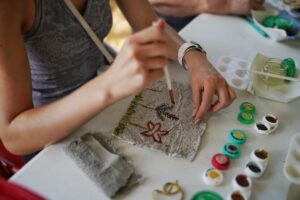
Perennial Project event day, Community participants, 2024
In Bellevue, Kentucky, a once-overgrown lot beside the railroad tracks has become a pollinator meadow. Its beginnings were unusual: 120 paintings made on handmade, seed-filled paper and planted by neighbors.
For artist and KFW grantee Devan Horton, the 30-by-30-foot garden represents more than a restored patch of land. It marks a transformation in the way she thinks about what art can do.
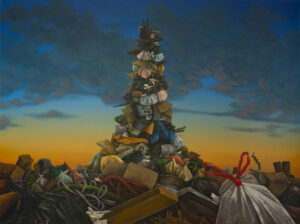
Offer / Oil on Canvas / 2019
Horton’s art has long been rooted in the environment. In an earlier series, she painted landscapes littered with trash, reflecting her concerns about how people interact with the natural world. This led her to think about the environmental impact of her own artistic practice.
“How do I make my art the action that I want to see?” she began asking herself.
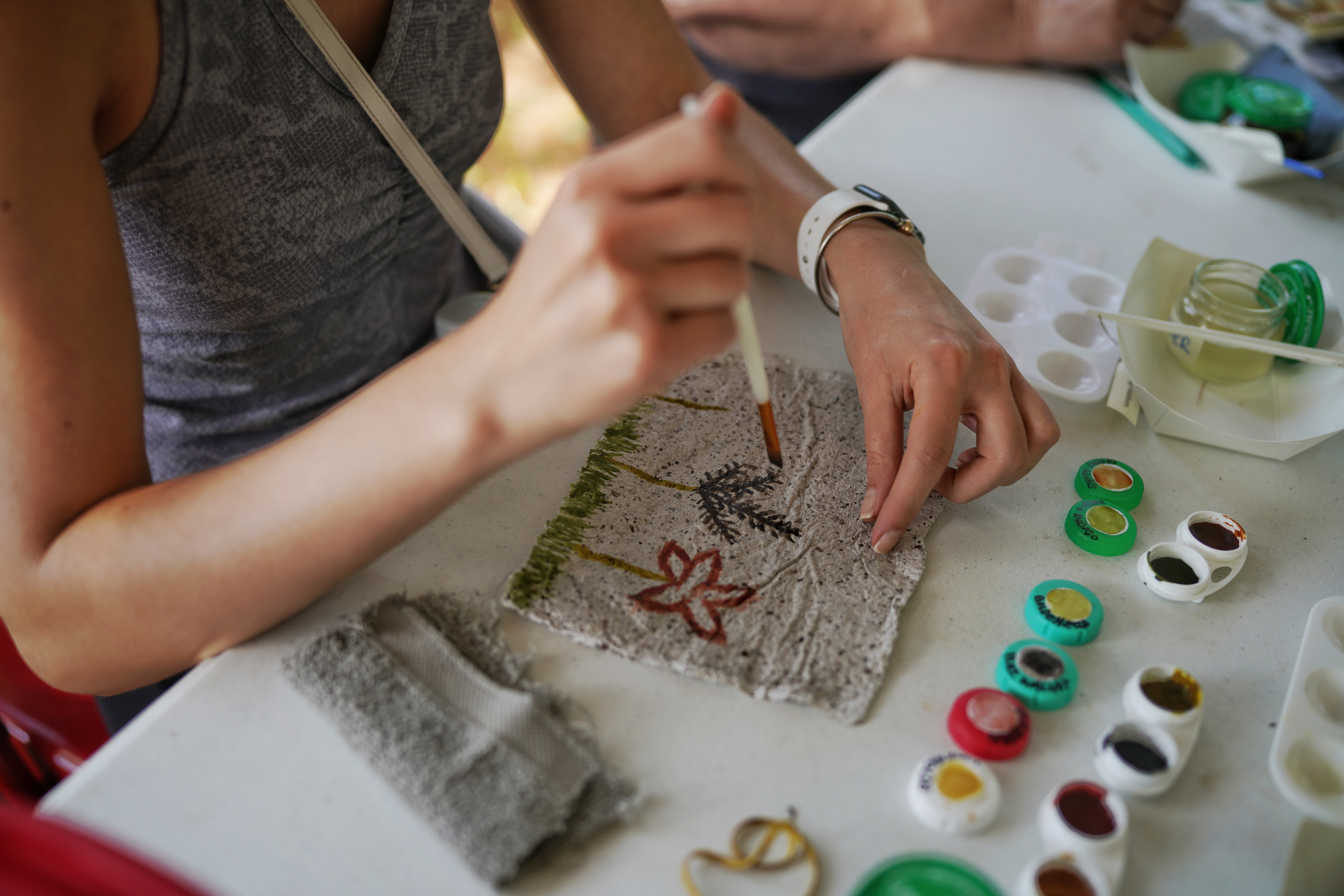
She started experimenting with sustainable art supplies, creating her own charcoal, nontoxic paints and inks, botanical dyes, and handmade paper. When she received a 2023 Art Meets Activism grant from the Kentucky Foundation for Women, she says she was able to create those materials on a scale that invited others into the process.
Working with the city of Bellevue, Horton transformed a neglected plot of land that had been overtaken by invasive plants. She spent the winter preparing the ground, then invited community members to create paintings on paper embedded with native pollinator seeds. Then everyone planted their artwork together.
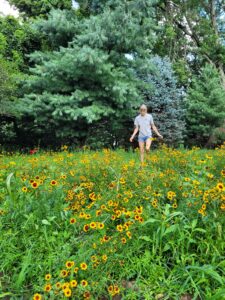
Perennial, June (2 months after event), Native Pollinator Meadow
The resulting Perennial Project brought neighbors and children together to make art, learn about ecology, and participate in restoring a small piece of their local environment. What began as an overlooked space became a growing meadow filled with native plants.
“That grant was really pivotal for me and my practice,” Horton says.
Before the project, Horton spent much of her time painting alone in her studio. The project helped her recognize the possibilities of sharing her sustainable materials and engaging communities directly in environmental restoration through art.
For Horton, the impact isn’t limited to what grows in the garden. It’s also about encouraging people to see familiar materials and everyday problems in new ways.
“I think of sharing ideas as like planting seeds as well,” she says, “because you don’t know what’s going to grow.”
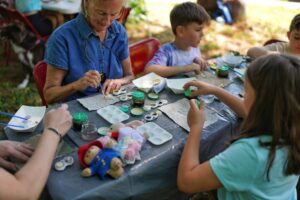
Perennial Project event day, Community participants, 2024
She hopes that introducing children to artmaking with unexpected materials, such as red cabbage or onion skins, can inspire curiosity, creativity, and new ways of thinking about the environment. Many of the materials she uses are inexpensive or freely available, making experimentation accessible to others.
The Perennial Project continues to grow, with neighbors helping to maintain the meadow. Horton acknowledges that sustaining a native garden requires ongoing care, and she is exploring how to build long-term support for similar projects on a larger scale.
Her interest in community collaboration extends beyond the garden. In 2025, Horton joined fellow Northern Kentucky grantees Bethany Pelle and Julia Martin to organize a KFW artist gathering at Arts Equals. The event brought local artists together for a weaving workshop and an opportunity to connect.
Now, with support from a 2025 Artist Enrichment grant, Horton is turning her attention to another relationship between people, art, and the land: the contributions of Kentucky women farmers.
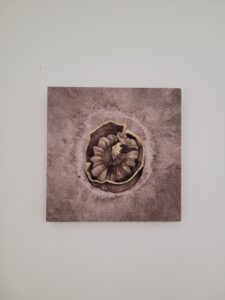
Open Shell (Walnut) / Black walnut dye on linen, walnut ink, and mica paint / 2025
As her practice has evolved from traditional painting into fiber arts, she has begun creating what she calls “quilt paintings,” combining textiles with botanical dyes and handmade paints. Her new project uses materials collected directly from farms to create “material portraits” of the women who work them.
Horton plans to visit women-owned farms across Kentucky, learn their stories, and explore opportunities to exchange materials, artwork, and workshops. She hopes to represent a wide range of agricultural experiences, from livestock farming to herbalism.
The project challenges assumptions about who farmers are and draws attention to women’s often-overlooked contributions to agriculture. By incorporating materials from each farm into her artwork, Horton also hopes to celebrate the diversity of Kentucky’s landscapes and the resources they provide.
“I just hope that it’s highlighting a lot of the unseen and the forgotten,” she says.
For Horton, feminist art is closely connected to nurturing, reciprocity, and participation in the cycles of life. Horton says KFW’s support has been instrumental in expanding that vision. The grants have allowed her to produce more materials, dedicate time to new techniques, and bring community members into projects that once might have remained inside her studio.
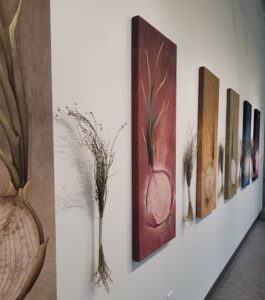
Reflections (Onion Series) / Botanical dyes of linen, homemade paints and inks, and dried flax / 2025
Where her earlier paintings explored the damage humans have done to the environment, her current work increasingly focuses on what people can do to repair it.
“We need hope. We need something exciting and hopeful,” she says.
As Horton continues developing her art, she is embracing the possibilities that come with each new collaboration. Her projects often evolve in unexpected directions.
“I’m just really excited to see what this grows into,” she says.
Click HERE to learn more about Devan Horton’s art.